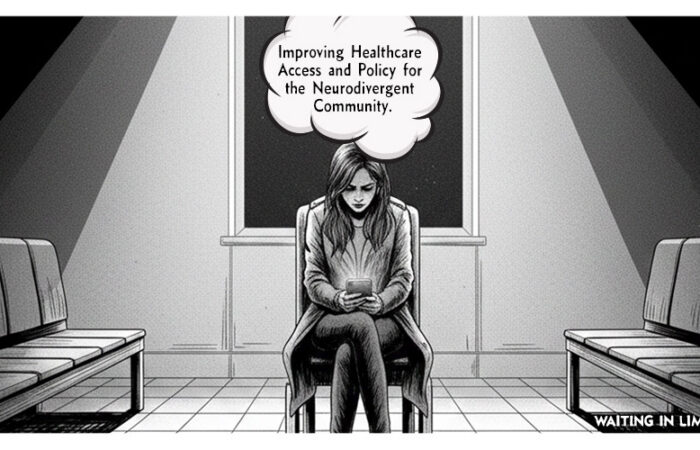


By now, many people are familiar with the concept of neurodiversity, a movement started in the 1990s, which reframes autism spectrum disorder (ASD), dyslexia, OCD, ADHD, and others through a more positive lens as legitimate differences, or variations, in how the human mind functions. However, not as many have heard of chronodiversity, a term referring to differences in people’s time management preferences and energy levels. Like neurodiversity, chronodiversity challenges the status quo with regard to energy levels and sleep-wake preferences, specifically in the workplace. Chronodiversity also overlaps with neurodivergence in that many neurodivergent individuals have different sleep-wake orientations and are sometimes prone to “time blindness”, or difficulty in gauging, perceiving, or managing time. While some employers might perceive chronodivergence as a drawback or liability, embracing and understanding it can actually become a workplace strength, increasing productivity, improving physical and mental health, and reducing stress, anxiety, and burnout. Knowing your own “chronotype” (i.e., being a night owl, a morning person, or somewhere in between) can also greatly improve your mental and physical health and creative output. The simple truth is that all of us are chronodivergent in some way, and workplaces that acknowledge those differences are the ones most primed to succeed.
The Harm of Insisting on a “Chrono-Normative” Workplace
As with neurodiversity, many companies are held back by stigmas, biases, and misconceptions about chronodivergence. In their essay for FastCompany.com, Ludmila Praslova and Camilla Kring identify “chrono-normativity” as a form of bias that manifests through negative workplace assumptions about time orientation and time-management. “The parallel between neurodiversity and chronodiversity,” they write, “is that societies and cultures treat forms of neurological wiring and time orientation as normative, and others as aberrant.” Although “neurodiversity and chronodiversity are as central to human life as biodiversity to life on Earth.” Some common workplace assumptions/stereotypes include associating early arrival with ambition and commitment; equating morning responsiveness with professionalism; performance reviews that reward temporal conformity; and meetings that default to early hours, in keeping with the preferences of those with more power. The result of these biases is that employees who are neurodivergent and/or chronodivergent feel pressure to conform and hide being different, which in turn leads to burnout, decreased productivity, anxiety, and lowered morale. “Sadly, the world doesn’t like [night] owls,” Axel Casas writes in an essay for Medium.com. “Most work shifts are 9–5, forcing them to wake up early when they don’t want to. Worse still, paperwork needs to be done in the mornings, or people will think you are lazy, unproductive, and more. The world,” he concedes, “rewards waking up early.”
So, how to make a difference? For starters, employers can allow much greater flexibility in scheduling and routines, with more acknowledgment of what chronodivergence is and why it’s so intrinsic to how people function. They should also become more aware of how and why supporting chronodivergence is so beneficial. As Shah Mohammed writes in an essay for Medium.com, “When employees are allowed to work during their peak hours, overall productivity naturally increases.” Mohammed adds that aligning work schedules with natural rhythms leads to improved job satisfaction and well-being for employees. On top of that, accommodating different chronotypes allows companies to extend their operational hours, providing better customer service across different time zones, without placing too much of a burden on one group. As Mohammed points out, “The future of work lies in adapting to our natural diversity, not fighting against it.”
At present, many workplaces are unfortunately still lagging behind in terms of that adaptation. As Praslova and Kring note, this is largely due to the fact that the timing structures underlying the modern workplace, such as early meetings, fixed hours, and morning-centric performance expectations, were not designed for people who are chronodivergent. By accepting these timing structures as the default, they write, a biological majority – those who are chronodivergent – are now treated as a cultural minority. Add to this the fact that individuals who are neurodivergent often experience irregular sleep-wake patterns, along with research showing that 75-78% of adults with ADHD show significantly later sleep readiness and preferred sleep-wake schedules compared to those who are neurotypical, and chrono-normativity becomes an even bigger problem. Praslova and Kring reach the same conclusion as Shah Mohammed: “a workplace that insists everyone perform on the same schedule harms people and limits the expression of their full talent.”
How to Manage Being Chronodivergent
Along with companies realigning their approach to chronodivergence, individuals who are chronodivergent can also make a difference in their own lives. In their article “Why Time Is Different for Neurodivergent People: Understanding Time Blindness”, ExceptionalIndividuals.com shares a variety of strategies that can help with managing time-blindness. One practical approach involves breaking complex tasks into simpler and more manageable steps, and tracking how long it takes to complete a task, to create a reference point for how long it should ideally take. Time-blocking, which allows building the day around specific tasks or activities, can also be extremely helpful. A third approach is to set an alarm to know when the allotted time for a given task is up, and the Pomodoro Technique, which involves breaking work into intervals by setting a timer to 25 minutes, working on the task for that timespan, taking a 5-10 minute break after the timer rings, and then repeating the cycle for four intervals.
Whether you’re neurodivergent or neurotypical, recognizing and appreciating that everyone’s chronotype is different, and understanding your own chronotype, can have a transformative impact, improving your mental and physical health. “Embracing the mornings as a time for creativity completely changed my life,” Colette Nichol writes for Storyenvelope.com. “Even though I really can’t stand mornings. Without embracing my chronotype, I’m not sure I could’ve written hundreds of blogs and created four courses while working with clients full time.” At the same time, understanding time-blindness/chronodivergence is something some neurotypical individuals might struggle with. “People who don’t have ADHD do not understand why those with ADHD time blindness are always so late,” Zara Harris, MS, OT, writes for CHADD.org.” Thinking that the person with ADHD is doing it on purpose can make them angry (“if they really cared, they would not be late.”) She adds that “people who are chronically late for work can be documented and fired. People who constantly show up late for meetings begin to get stereotyped. People who do not hand in their reports on time are no longer trusted or thought reliable. Nowadays, when it is hard to fire a worker for incompetence, time keeping, and time management behavior can be recorded, and the complaints stand up in an appeal.”
Creative Spirit’s HireDifferent Academy, a first-of-its-kind, comprehensive training program, works directly with companies to help them become more understanding of neurodiversity and more inclusive of employees who are neurodivergent, as well as understanding chronodiversity. You can learn more about HireDifferent Academy here. Companies can give themselves a huge advantage by supporting chronodiversity and neurodivergence, embracing the fact that thinking and working differently are advantages, rather than flaws. Shifting from a rigid, outdated mindset to a more positive, holistic approach that acknowledges different chronotypes can make workplaces much more productive, accessible, and inclusive for everyone.
Sources
Nichol, C. (2022). “Your Chronotype and How It Can Transform Your Creativity”, StoryEnvelope. https://storyenvelope.com/chronotype/
McMahan, J. (2026). “Why Time Is Different for Neurodivergent People: Understanding Time Blindness”, Exceptional Individuals. https://exceptionalindividuals.com/about-us/blog/why-time-is-different-for-neurodivergent-people/
Mohammed, S. (2024). “Embracing Chronodiversity: Overcoming Bias and Rethinking Work Schedules for Peak Productivity”, Medium. https://shahmm.medium.com/embracing-chronodiversity-overcoming-bias-and-rethinking-work-schedules-for-peak-productivity-edbf198cc3e1
Praslova, S. (2026). “80% of employees struggle with this hidden workplace bias. Here’s what employers can do”, FastCompany. https://www.fastcompany.com/91477739/70-of-employees-struggle-with-this-hidden-workplace-bias
Harris, Z. (2015). “Beating Time Blindness”, Children and Adults with Attention-Deficit/Hyperactivity Disorder (CHADD) https://chadd.org/wp-content/uploads/2018/06/ATTN_10_15_BeatingTimeBlindness.pdf