

By Menachem Rephun, Communications Manager, Creative Spirit
In employment, managers and other senior employees are generally the ones tasked with coaching and mentoring new hires. This also holds true for employees who are neurodivergent, who often need different forms of guidance in navigating the workplace, as well as the hiring and interview process. But what about reverse mentorship, i.e., programs where neurodivergent employees offer guidance to managers on empathy, communication, and assumptions about productivity? As Ryan Carruthers writes in his article “Reverse Mentoring: A Toolkit for Diversity and Inclusion Initiatives”, the concept of reverse mentorship originated with Jack Welch, the former CEO of General Electric. Realizing that younger employees were more knowledgeable about new technologies than many of their managers, himself included, Welch encouraged 500 of his senior leaders to partner with younger and newer mentors. Welch’s approach, while unconventional, could be extremely helpful in many work environments today, where unconscious bias and lack of awareness about neurodivergence (i.e. conditions like autism spectrum disorder, dyslexia, ADHD, and others) are still major problems. Reverse mentorship is a mutually beneficial arrangement, supporting neurodivergent employees while educating senior employees on ways to make their companies much more accessible, inclusive, and understanding.
Research into reverse mentorship is still in its early stages. However, the work done so far has already given valuable insight into how beneficial reverse mentorship can be. In their study “From Isolation to Inclusion: How Reverse Mentoring Empowers Neurodiverse Workplaces,” Temple University professors Matt Tincani, Jawaria Ashraf, Armando X. Estrada, and Sanghamitra Chaudhuri explore how Social Exchange Theory (SET) can serve as a foundation for reverse mentorship. SET is a sociological/psychological theory that maintains that relationships are based largely on mutual exchanges of resources, whether material or intangible. SET relates to reverse mentoring by allowing neurodiverse mentors to learn more about empathy and collaboration, as well as developing a stronger sense of connection. In turn, this can improve engagement and retention by allowing neurodiverse employees to feel more valued and supported, creating, in the researchers’ words, “a cycle of mutual reinforcement as outlined by the social exchange theory.”
The second approach the researchers explored is Self-Determination Theory (SDT), which posits that all humans are driven by three innate psychological needs: autonomy, or the need to feel in control of one’s own behaviors and goals; competence, or the need to feel effective and capable in one’s interactions with the environment; and relatedness, meaning the need to feel connected to others and to have a sense of belonging. “Neurodiverse employees often accept roles that may not align with their strengths or interests, simply to maintain employment,” the researchers point out. “Such misalignment between job responsibilities and personal passions can lead to reduced motivation, higher turnover, and diminished job stability.” As the researchers explain, companies can leverage SDT principles to create work environments that prioritize the autonomy and competence of employees who are neurodivergent. The researchers believe that reverse mentorship can create a more inclusive workplace culture, as well as address the psychological needs of neurodivergent employees as outlined by SDT.
The Business Case for Reverse Mentorship
Business leaders have also shared their experience implementing reverse mentorship programs. “Reverse mentoring is where you get someone of difference,” Patrice Gordon, founder of the reverse mentoring organization Eminere, explained in a TED talk. “In my definition,” she said, “I look at [reverse mentorship] in regard to the protected characteristics, so that may be age, gender, ethnicity, disability, sexuality, veteran status, just to name a few.” Gordon added that her objective with reverse mentoring “is to make sure those senior leaders around that table have an alternative viewpoint. A viewpoint that they may not have in their personal circle, or their inner circle.” Gordon pointed out that “similarity bias” exists because of the innate tendency many people have to feel more comfortable with those who are similar to themselves. “One of the reasons why I’m a particular fan of reverse mentoring,” Gordon said, “is because it forces you to develop a relationship with someone of difference. And we know that empathy is developed when we spend the time to get to know and understand someone of difference.” She encouraged employers to step outside of their comfort zone as a necessity for growth. While reverse mentorship is beneficial, Gordon also cautioned employers to avoid forced participation in reverse mentorship, so that employees don’t feel put-upon to join in.
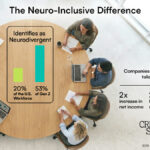
Maha Abouelenein, CEO of the strategic communications firm Digital & Savvy, also makes a compelling business case for reverse mentorship. In her article, “4 Reasons Leaders Must Embrace The Power Of Reverse Mentorship In 2025”. Abouelenein writes that with rapid shifts in technology, culture, and communication, “leaders who fail to engage with younger generations risk falling behind…Gen Z and Millennials bring fresh perspectives, digital fluency, and new ways of thinking that can unlock powerful insights for the most seasoned professionals.” This is especially true at a time when over 50% of Gen Z now identifies as being neurodivergent. Abouelenein writes that providing reverse mentorship for Gen Z employees, including those who are neurodivergent, brings benefits like digital fluency, cultural awareness, fresh perspectives, and new ways of working. Digital fluency in particular is a strong suit for Gen Z, she notes, as they have grown up with social media, digital storytelling, and rapid information-sharing. They also frequently excel in cultural awareness, due to being connected with things like TikTok trends, internet slang, and shifting cultural norms. Employers who utilize reverse mentorship can also benefit from the fresh perspectives, insights, and ideas of employees who are both a part of Gen Z and neurodivergent.
How to Actually Implement Reverse Mentorship
While the advantages of reverse mentorship, such as growth, productivity, innovation, and retention, are clear, some companies might be unsure about how to actually get started. In her article, Aboulenein offers guidance on how employers can actually implement reverse mentorship. For starters, she encourages approaching reverse mentorship with “curiosity and humility”, i.e., being open to feedback and asking thoughtful questions about digital trends, cultural shifts, and communication styles. After all, as Patrice Gordon pointed out in her TED talk, reverse mentorship can only succeed in environments where employers are open to stepping outside their comfort zone and learning about those who are different from themselves. In short, reverse mentorship is predicated on viewing differences as a strength and an asset, rather than a drawback.
On that note, Aboulenein encourages creating space for dialogue by establishing regular check-ins where younger employees can comfortably share their insights. “These conversations shouldn’t feel forced,” she writes. “Create an environment where they can speak honestly and you can listen actively.” She recommends a team-based approach to reverse mentorship, such as inviting younger team members to lead training sessions on communication tools, emerging tech, and cultural insights. Lastly, she stresses that reverse mentorship revolves not only around learning, but action and willingness to implement the insights you’ve gained. “Embracing reverse mentorship isn’t just about learning,” she writes. “It’s about leading with relevance. When leaders actively listen, adapt, and evolve, they become more effective mentors themselves—and build stronger connections with their teams.” In his article cited above, Ryan Carruthers quotes Kisha Velazquez, Senior Content Marketing Manager at Compt. “I don’t think I would have lasted as long as I did at my first job if it had not been for my assigned mentor,” Velazaquez said. “When I was struggling with the feeling of not fitting in at work, she provided the safety to express my concerns and challenges that I didn’t always feel I had during one-on-ones with my direct manager.”
In an interview with Carruthers, Michelle Ferguson, author of the book Women Mentoring Women, shared her perspective on how reverse mentorship can enhance inclusion and improve access to higher levels of leadership. “Sometimes the person in the ivory tower, the people around them, [are] really cautious about what they say,” Ferguson said, “whereas someone in the mentoring relationship will be more frank. And while the goal is to get the senior person more aware of what it’s like to be in an underrepresented group, the reality is that person in the underrepresented group has access to a senior executive. So like while it’s technically reverse mentoring, they do have access that they wouldn’t normally have.” In his article, Carruthers points out that reverse mentorship can help with developing stronger leadership within the company, and can also help minorities, including employees who are neurodivergent, develop their skills and abilities to take on more senior leadership roles within the organization. Regarding topics to cover in a reverse mentorship program, Carruthers mentions discussing whether the leadership team is balanced, i.e., representative of the society and culture you live/work in, and how to change it if it isn’t. He also recommends considering specific diversity issues in the workplace, such as communication challenges, biases, resistance to change, and the need for more employee resource groups (ERGs).
In his essay “How Reverse Mentoring Bridges Generational And Cultural Divides In The Workplace”, Forbes contributor Jack Kelly writes that some senior leaders “may be reluctant to be mentored by more junior staff, perceiving it as a threat to their authority or expertise. There could be a reluctance to learn from younger employees due to generational biases or an inflated ego.” He writes that the solution is open communication, as well as highlighting the benefits of reverse mentorship and creating a supportive environment. Employees who are neurodivergent have a wealth of skills, talents, and experiences to share. Their capacity for outside-the-box thinking, expert attention to detail, and strong work ethic make them invaluable assets to any company. Reverse mentorship provides an avenue for senior managers and business leaders to benefit from these skills and abilities in a unique way, making companies more inclusive and accommodating in the process. Openness to understanding, appreciating, and learning from others is an indispensable aspect of business success. Embracing reverse mentorship can be truly transformative, and there’s no reason for companies to miss out on that opportunity.
Sources:
Carruthers, R. (2021). “Reverse Mentoring: A toolkit for diversity and inclusion initiatives”, Together by Absorb. https://www.togetherplatform.com/blog/reverse-mentoring-toolkit
Tincani, M. (2025). “From Isolation to Inclusion: How Reverse Mentoring Empowers Neurodiverse Workplaces”, Academy of Human Resources Development, Temple University. https://www.researchgate.net/publication/389403799_From_Isolation_to_Inclusion_How_Reverse_Mentoring_Empowers_Neurodiverse_Workplaces
Patrice Gordon TED talk: “What’s Missing in the Workplace”: https://www.youtube.com/watch?v=44-MDhdbn1E
Abouelenein, M. (2025). “4 Reasons Leaders Must Embrace The Power Of Reverse Mentorship In 2025”, Forbes. https://www.forbes.com/sites/mahaabouelenein/2025/03/13/4-reasons-leaders-must-embrace-the-power-of-reverse-mentorship-in-2025
Kelly, J. (2024). “How Reverse Mentoring Bridges Generational And Cultural Divides In The Workplace”, Forbes. https://www.forbes.com/sites/jackkelly/2024/06/18/how-reverse-mentoring-bridges-generational-and-cultural-divides-in-the-workplace/